
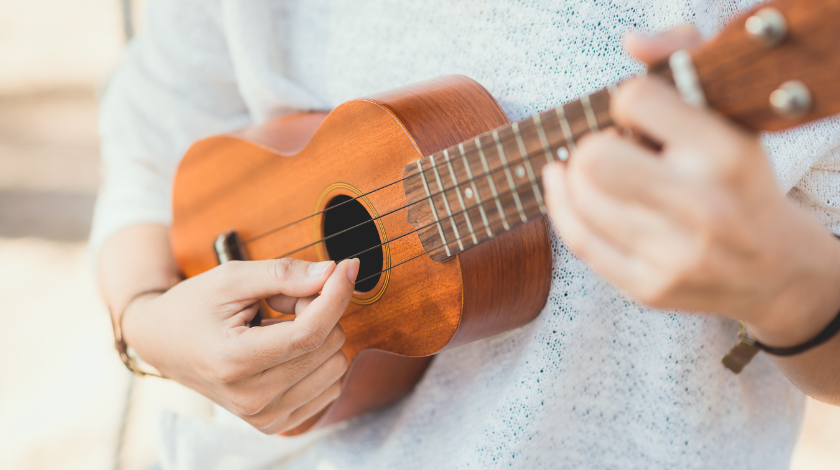

There is something magical about the ukulele. The moment you hear those bright, cheerful strings, something inside you just lifts. It is hard not to smile. But have you ever stopped mid-strum and wondered, where did this little instrument actually come from? I did, years ago when I first picked one up at a friend’s beach bonfire in Maui. I had no idea I was holding something with a rich, fascinating, and deeply human story behind it. The ukulele has traveled across oceans, survived cultural shifts, been embraced by kings, and is now played by millions of people around the world. Its history is not just about music. It is about immigration, identity, love, and the universal human desire to create something beautiful.
The Portuguese Connection: Where It All Began
To truly understand the ukulele, you have to go back to 19th-century Portugal, specifically to the island of Madeira. Portugal had a small stringed instrument called the braguinha, sometimes also called the machete de braga. This instrument was compact, had four strings, and produced a light, lively sound that was perfect for folk music and street celebrations. It was a beloved instrument among working-class Portuguese people, played at festivals and family gatherings across the island.
When economic hardship hit Madeira in the 1870s, thousands of Portuguese families decided to seek a better life elsewhere. Sugar plantations in Hawaii were actively recruiting labor at that time, and many Madeiran families saw this as their chance. They packed their belongings, their hopes, and of course, their music.
In August 1879, a ship called the Ravenscrag arrived in Honolulu, Hawaii, carrying around 400 Portuguese immigrants from Madeira. Among these passengers were three men who would change the course of music history forever: Manuel Nunes, Augusto Dias, and José do Espírito Santo. These three men were skilled instrument makers, and they brought with them both the knowledge of crafting the braguinha and the deep love of playing it.
Arrival in Hawaii: The Moment Everything Changed
According to historical accounts, even before the ship had fully docked in Honolulu Harbor, one of the passengers, a man named João Fernandes, grabbed a braguinha and began playing Portuguese folk songs on the deck. The Hawaiian locals who gathered at the harbor were absolutely mesmerized. They had never heard anything quite like it. The sound was so fast, so energetic, and so delightful that it seemed almost impossible that human fingers could move that quickly across such tiny strings.
The Hawaiian people have a deep cultural appreciation for music and rhythm. Music, dance, and chant are at the very core of Hawaiian cultural identity. So when they heard this lively little instrument, they immediately connected with it. The Hawaiians reportedly described the movement of the player’s fingers on the strings as looking like jumping fleas, which in Hawaiian translates to “ukulele” (uku = flea, lele = jumping). And just like that, one of the most beloved instrument names in history was born from a simple, joyful observation.
The three craftsmen, Nunes, Dias, and Santo, soon set up workshops and began building instruments. But they did not simply copy the braguinha exactly. They adapted it, changed the tuning, adjusted the shape slightly, and used local Hawaiian woods like koa to build it. The result was something new. It was not quite a braguinha anymore. It was something distinctly Hawaiian. It was the ukulele.
How Hawaiian Culture Adopted and Transformed the Ukulele
What happened next was a beautiful example of cultural exchange done right. The Hawaiian people did not just passively receive this instrument. They claimed it, shaped it, and made it their own. Hawaiian musicians began incorporating the ukulele into their traditional music alongside the slack-key guitar and the lap steel guitar. They tuned it to their liking, developed their own playing techniques, and began using it to accompany the ancient art of hula dancing.
The ukulele quickly became woven into the daily life of Hawaiian communities. Children learned to play it, families gathered around it, and it became as much a part of Hawaiian identity as the lei or the hula. What started as a Portuguese folk instrument had transformed into a symbol of the Hawaiian spirit: warm, welcoming, joyful, and deeply communal.
This is something I find genuinely moving about music. No matter where it starts, music has the ability to cross cultural boundaries and find a home in a completely different community, often becoming even richer in the process. The ukulele is a perfect example of that.
King Kalakaua and the Royal Endorsement
Perhaps no single person did more to legitimize the ukulele in the eyes of the world than King David Kalakaua, who reigned over the Hawaiian Kingdom from 1874 to 1891. King Kalakaua was a passionate supporter of Hawaiian culture and arts. He saw the ukulele as an important part of preserving and celebrating Hawaiian identity at a time when Western influences were rapidly changing island life.
The king himself was reportedly a talented ukulele player and frequently had it performed at royal gatherings, court events, and state occasions. His royal endorsement gave the ukulele a level of prestige that it might never have achieved otherwise. If the king of Hawaii played it and loved it, then it was clearly something worthy of respect and celebration.
King Kalakaua also worked hard to revive traditional Hawaiian music and hula, which had been suppressed under earlier missionary influences. The ukulele became central to this cultural revival, and its status in Hawaiian society became firmly established during his reign.
The Ukulele Goes to Mainland America
For the first few decades of its existence, the ukulele was mostly known only within Hawaii. That changed dramatically in 1915, when Hawaii was featured at the Panama-Pacific International Exposition in San Francisco. This was a massive world fair celebrating the completion of the Panama Canal, and Hawaii had its own pavilion showcasing its culture, people, and music.
Hawaiian musicians performed daily at the exposition, playing ukuleles and steel guitars for millions of American visitors. The mainland American public was absolutely enchanted. Something about the easy, breezy sound of the ukulele captured the imagination of a country that was on the edge of a new cultural era. People left the exposition wanting to learn more about Hawaii and, specifically, wanting to learn the ukulele.
Music publishers started printing ukulele song books. Instrument companies ramped up production to meet the demand. Mail-order catalogs began selling affordable ukuleles to anyone in the country who wanted one. Within just a few years, the ukulele had become a genuine national craze.
The Golden Age of the Ukulele: 1920s to 1940s
The 1920s are often called the golden age of the ukulele, and with good reason. During this decade, the instrument was everywhere. It appeared in vaudeville shows, jazz clubs, early films, and on the radio. Tin Pan Alley songwriters began writing specifically for the ukulele, and sheet music for the instrument sold in enormous quantities.
One performer who helped define this era was Roy Smeck, often called “The Wizard of the Strings.” Smeck was a virtuoso musician who played multiple instruments, but his ukulele performances were jaw-dropping. He appeared in some of the earliest sound films ever made and showed audiences that the ukulele was not just a simple beginner instrument. It was capable of remarkable musical expression in the right hands.
During World War II, the ukulele maintained its popularity as a morale-boosting instrument. It was small, portable, and affordable, making it easy for soldiers to carry and play in camps or on ships. The instrument carried a kind of optimism with it that people needed during a dark and difficult time in history.
Decline and the Quiet Years
After the energy of the 1940s began to fade, the ukulele slowly fell out of mainstream fashion. The rise of the electric guitar in the 1950s and 1960s changed popular music dramatically. Artists like Elvis Presley and Chuck Berry were redefining what cool sounded like, and the ukulele, with its cheerful, light sound, seemed out of step with the times.
The instrument never completely disappeared. It remained popular in Hawaii and had dedicated enthusiasts around the world. Arthur Godfrey, a popular American TV and radio host, regularly played ukulele on his shows throughout the 1950s and even sold affordable ukuleles with his endorsement. He introduced a whole generation of Americans to the instrument on their television sets, keeping the flame alive during what might otherwise have been a complete decline.
But for the most part, the ukulele spent several decades in the background, waiting for its moment to come again.
Types of Ukuleles and How They Developed Over Time
As the ukulele grew in popularity and spread around the world, makers began experimenting with different sizes to produce different tonal qualities. Today there are four main sizes, each with its own character.
The soprano ukulele is the original and smallest size. It produces the classic bright, tinny sound that most people associate with the word ukulele. It is what the early Hawaiian builders made, and it remains the most iconic version.
The concert ukulele is slightly larger than the soprano. It was developed in the 1920s to produce a fuller, louder sound suitable for stage performances. It has a bit more room on the fretboard, which makes it slightly easier to play for people with larger hands.
The tenor ukulele is larger still and produces a warmer, deeper sound. It became popular among professional players who wanted more volume and tonal depth without switching to a guitar.
The baritone ukulele is the largest and is tuned quite differently from the others, actually using the same tuning as the top four strings of a guitar. It produces a sound that bridges the gap between the traditional ukulele sound and that of a classical guitar.
This evolution of sizes shows how a simple folk instrument can grow and adapt over time to serve the needs of a wide range of musicians.
Famous Ukulele Players Who Shaped History
Throughout its history, the ukulele has been shaped by extraordinary musicians who showed the world what it could do. Beyond Roy Smeck and Arthur Godfrey, two modern players deserve special mention.
Israel Kamakawiwoole, known affectionately as Iz, was a Hawaiian musician whose 1993 medley of “Somewhere Over the Rainbow” and “What a Wonderful World,” played on ukulele, became one of the most beloved recordings in modern music history. Iz’s gentle, soulful playing reminded the world of the deep emotional power that a simple ukulele could carry. His version of that song has now been streamed hundreds of millions of times and continues to move people to tears all over the world. I personally cannot hear that song without feeling a deep sense of peace and quiet joy.
Jake Shimabukuro is a contemporary Hawaiian ukulele virtuoso who has completely redefined what people believe is possible on a four-string ukulele. When a YouTube video of him playing a ukulele version of “While My Guitar Gently Weeps” went viral in 2006, it shocked the world. People who had never thought much about the ukulele suddenly realized they had been completely underestimating this tiny instrument. Jake has since performed all over the world and is widely credited as one of the key figures of the modern ukulele revival.
The Modern Revival: From YouTube to Global Stages
Starting in the late 2000s and accelerating through the 2010s, the ukulele experienced a genuine global revival. YouTube played a huge role in this. Suddenly, anyone with an internet connection could watch ukulele tutorials, discover new players, and learn songs in their living room. The barrier to entry was low, the instrument was affordable, and the learning curve was gentler than many other string instruments.
Schools around the world began incorporating ukulele into music education programs, recognizing it as an accessible gateway instrument that could spark a lifelong love of music. Communities formed online and in person, sharing songs, tips, and a genuine love for the instrument.
Today, ukulele festivals are held across the globe, from Hawaii to Japan to the United Kingdom. The ukulele is no longer just a Hawaiian or American phenomenon. It is a truly global instrument with a community that reflects the same openness, warmth, and joy that the instrument itself produces.
Conclusion
The story of the ukulele is, at its heart, a story about people. It is about Portuguese immigrants who carried their music across an ocean, about Hawaiian people who welcomed that music and made it their own, about kings who saw its value, about virtuosos who pushed its limits, and about millions of ordinary people who fell in love with its sound. From the docks of Honolulu Harbor in 1879 to stages and living rooms all over the world today, the ukulele has proven that great things really do come in small packages.
If you have never played one, I genuinely encourage you to try. Pick one up, learn a few chords, and you will immediately understand why this instrument has captured hearts across more than 140 years of musical history. It is not just an instrument. It is a connection to something joyful and deeply human.
Frequently Asked Questions (FAQs)
Q1: Where did the ukulele originally come from?
The ukulele originated from a Portuguese instrument called the braguinha (or machete), brought to Hawaii by Madeiran immigrants in 1879. Hawaiian craftsmen and musicians then adapted it into the instrument we know today.
Q2: Who invented the ukulele?
The ukulele was not invented by a single person. Portuguese immigrant craftsmen Manuel Nunes, Augusto Dias, and José do Espírito Santo are credited with building the first ukuleles in Hawaii after arriving in 1879. Player João Fernandes is credited with first performing on the instrument in Hawaii.
Q3: What does the word “ukulele” mean?
In Hawaiian, “ukulele” roughly translates to “jumping flea,” which is thought to describe the fast, lively movement of a player’s fingers across the strings.
Q4: When did the ukulele become popular worldwide?
The ukulele first gained broad international attention after the 1915 Panama-Pacific International Exposition in San Francisco, then enjoyed major popularity in the 1920s. A modern global revival began in the late 2000s, largely driven by YouTube and social media.
Q5: What are the four types of ukuleles?
The four main types are soprano (smallest, most classic sound), concert (slightly larger with fuller tone), tenor (warmer and deeper), and baritone (largest, tuned similarly to a guitar).
Q6: Who is the most famous ukulele player in history?
Many would argue Israel Kamakawiwoole is the most beloved, known for his emotional rendition of “Somewhere Over the Rainbow.” Jake Shimabukuro is widely considered the greatest technical player of the modern era.